
Don’t panic!!! This isn’t what you think it is… well, I mean maybe it is… if you were expecting a blog post on locked stitches and double chains of course!!
Locked stitches and double chains are two of the simplest adaptations you can make to your crochet to dramatically improve the results that you get. But what are they?
Locked stitches are stitches worked into the top of the post of the previous round. Most crochet guides tell you to work in this big space in the row below, and that’s fine if you’re doing a big block, but do you ever look at your stitches and see them slanted off to one side, or even filet crochet that just isn’t as neat as you’d like?
This happens because the gap that you are working into is to one side of the post of the stitch, so forever more it will look off centre.
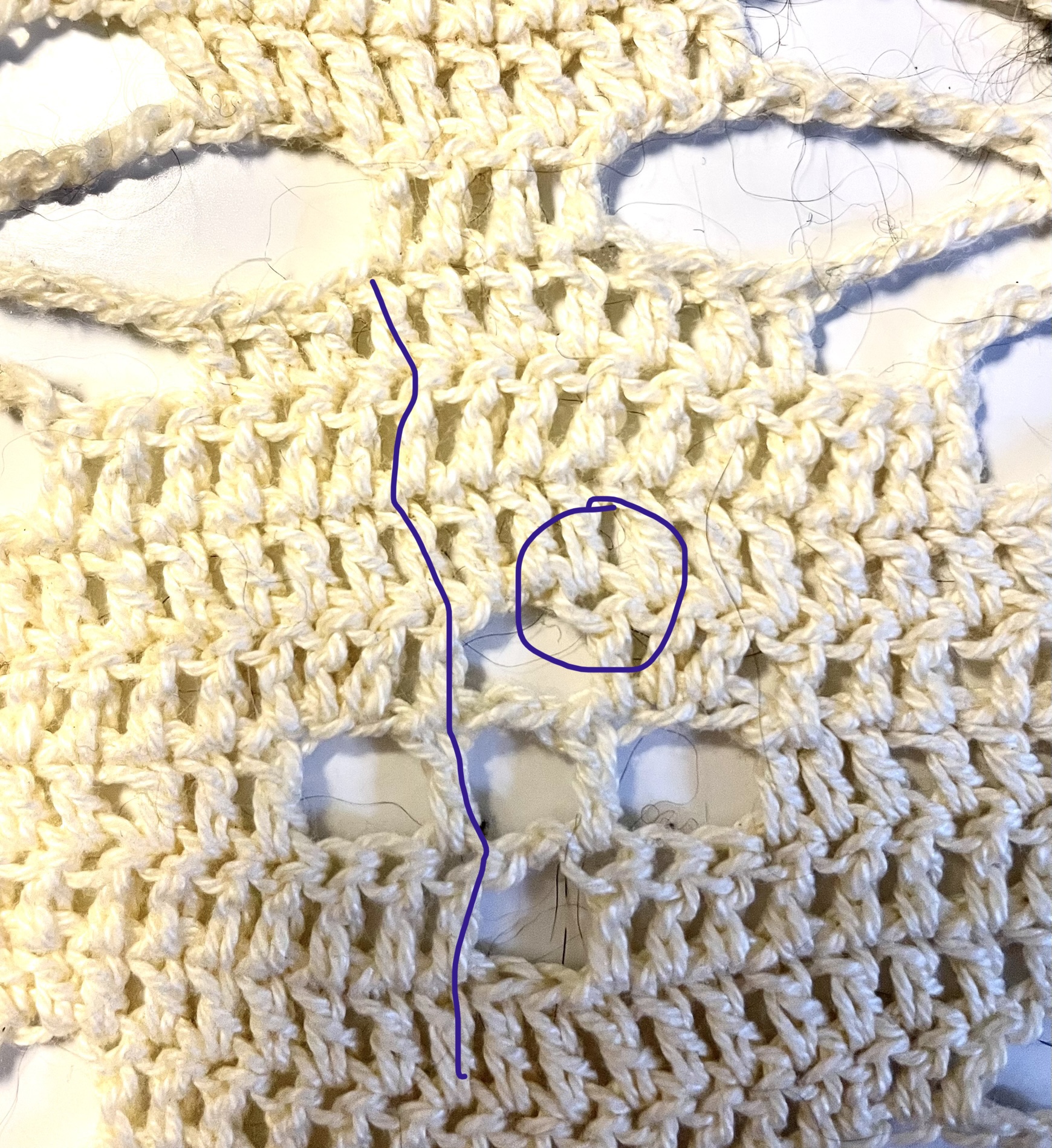
Now don’t get me wrong, working into that space has a lot of advantages, it’s easier for a start, and the crochet fabric that you have at the end has good drape and stretch. If you are making something though that has really defined lines, like filet crochet, if you don’t lock at the very least the first and last stitches in each square, when you block the finished piece you will never get those really crisp effects and it will just look a bit sloppy.
This is a filet crochet piece from a few years ago that I was super proud of at the time, I mean I love it, it’s worn and washed well, but I look at it now and cringe. If you look at the line of stacked stitches, because every one is off centre, and working in rows of course means that every row is off centre in the opposite direction… you get a wibbly wobbly line.
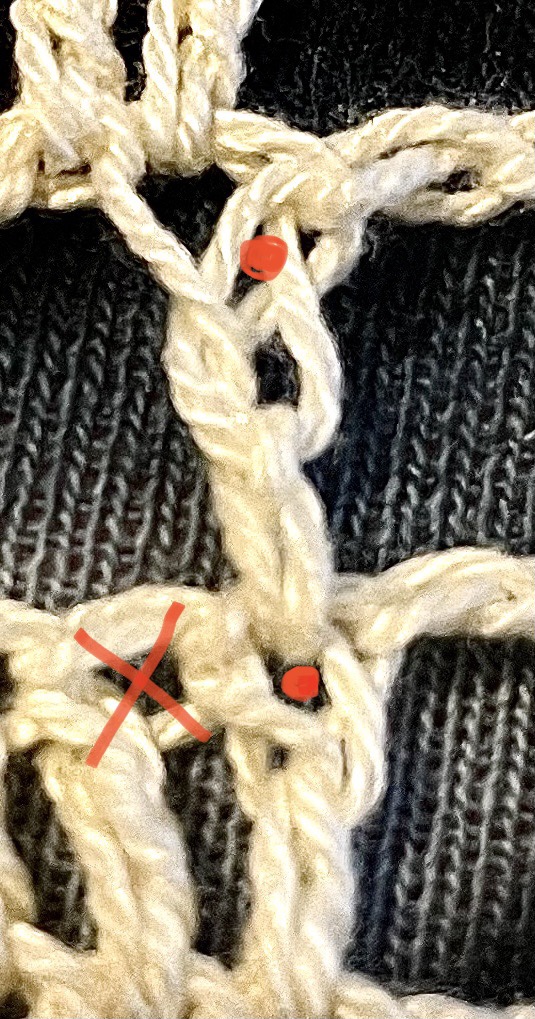
Apologies for the grainy photo!
This photo shows 3 rows of stitches. In the bottom stitch, the stitch above has been worked right into the top of the post below. It is centred, and there’s no movement possible side to side. That stitch will always be centred.
If you look at the stitch above worked into the traditional space, it’s to one side, and even with blocking, there will be a ‘step’ from row to row.
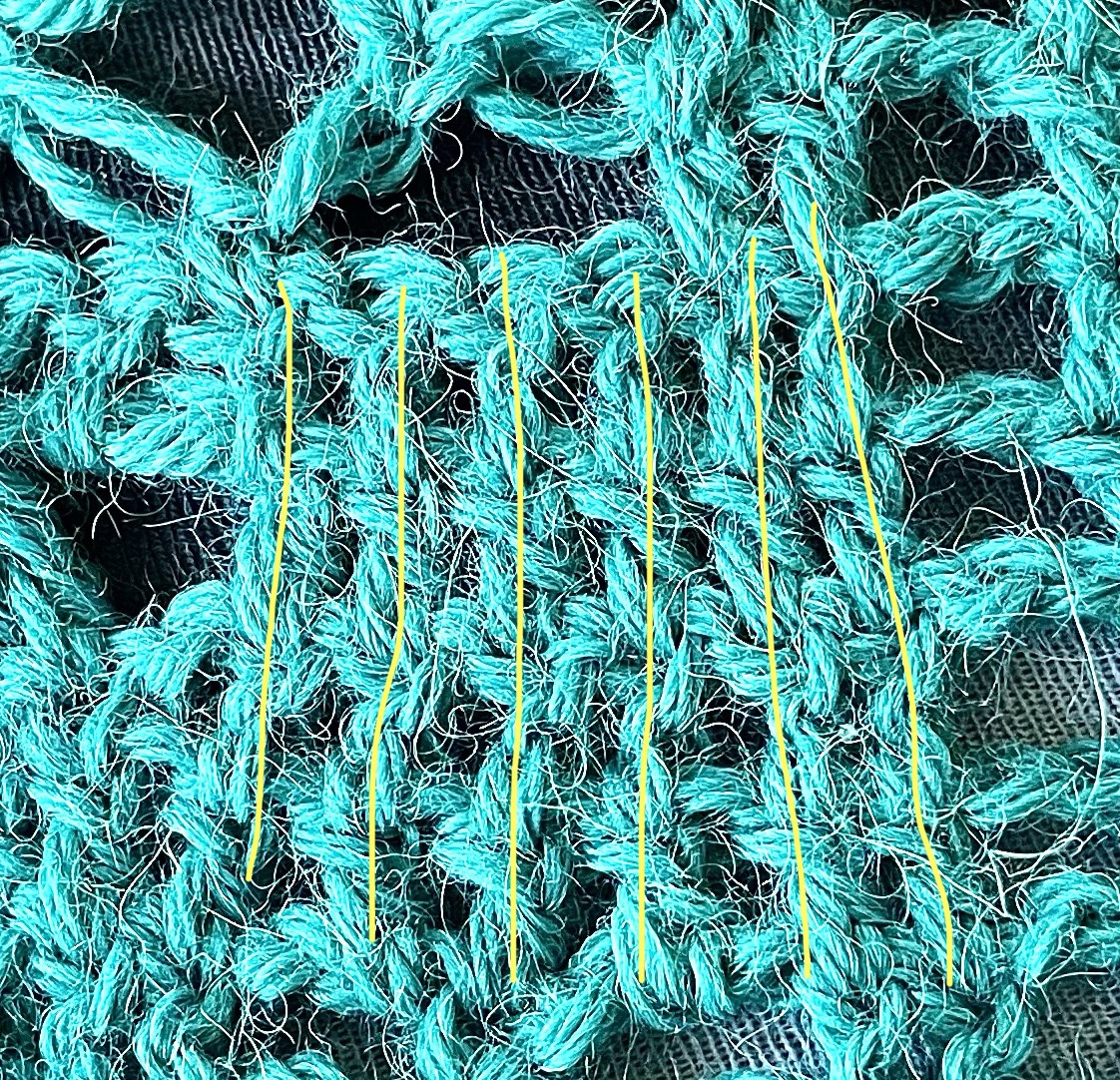
This example is one where in almost every stitch is locked. Now this is a somewhat tricky example because it’s not been blocked yet, and as you can see the right hand side is a little lean-to however, that will easily come right when blocked.
So what is this good for, why and when to use it?
Locking stitches has consequences, because working into that much smaller space, there is less room for the stitch to move horizontally.
Fantastic for filet crochet, but not so great for example for a sweater, as it’s going to be rigid widthways. However not only can it look neater, it can be used to stop spread. I use it in The Train Journey Home to prevent the shawl getting wider and stretching out the filet blocks.
Double Chains or triple, I’m not here to judge
One of the most important things about filet style crochet, is tension. If your work is too loose it looks sloppy, and the pattern can’t be seen, or worse it’s far too wide for the picture, and it looks like someone sat on it.
But too tight is a problem too as it starts to pucker and pull. So what’s the solution? Well… as you’re starting to crochet your blocks, every time you skip 1 stitch at the bottom, chain 2 at the top.
Yes I’m telling you to ignore the pattern here!
What this does is give a tiny little bit of ease. Remember in my Breaking Chains we looked at how the crochet chain was a strong stitch with no stretch, so if you happen to have very dainty neat little chains…. your surrounding treble crochet in the blocks will stretch further than the chain.
So double chain that!
But…. if your crochet chains are really really super neat and tiny, and even with a double chain, you still get puckering, add in another one!
But… this is madness!
Yes it is! What we are doing is checking tension as we go so you’re only adding in the 3rd chain IF the 2nd chain is still pulling. But really, for most things 2 chains per skipped stitch should be enough.
Just remember, when you work over the top of that chain space, you are only adding in a single treble, you’re not increasing stitches here just adding ease!
 Gloamingology